Titanium Clad Plate Sourcing from China
Meritus Technology procures titanium clad steel plate from audited mills in China — handling supplier qualification, hold-point inspection, EN 10204 documentation, and export logistics on behalf of EPC contractors and end users worldwide.
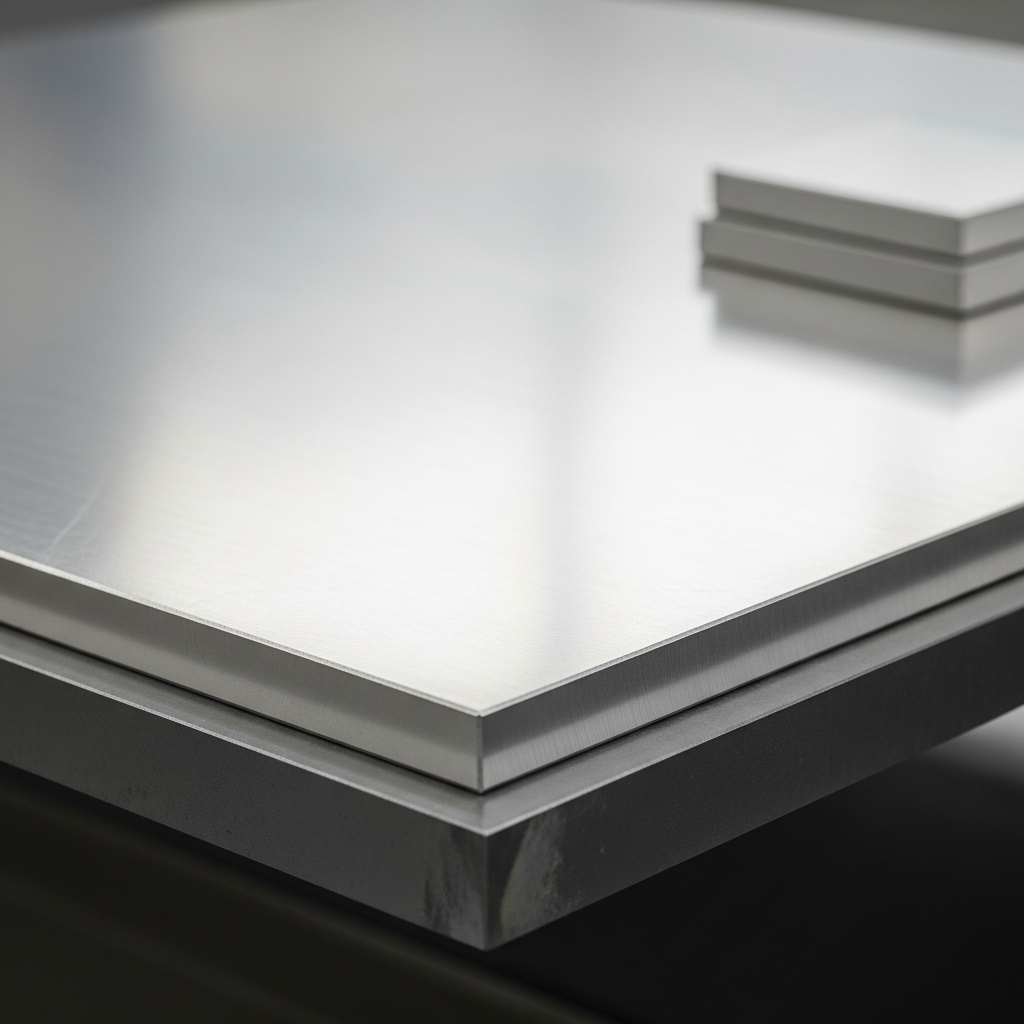
Titanium clad plate bonds a thin layer of corrosion-resistant titanium to a thicker structural base plate of carbon or stainless steel. The titanium layer provides the chemistry resistance — to seawater, chlorides, dilute acids, and oxidizing media — while the base plate carries the mechanical load. For pressure vessels, heat exchangers, columns, and reactors operating in aggressive service, clad plate delivers titanium-grade durability at a fraction of solid-titanium material cost.
China is now the largest concentration of titanium mill capacity in the world, producing the majority of the global supply of commercially pure and alloyed titanium plate. Buyers source from China to access this capacity, but the procurement path is rarely simple — mill qualification, language, inspection coordination, and export documentation are real barriers.
Meritus operates as the procurement and inspection layer between the buyer and the mill. We do not own bonding lines or operate mills. We qualify and audit mill partners, manage RFQs and clarification, witness hold points, and route the documentation a buyer needs to satisfy their design code and end-client.
Grades & Standards We Source
| Layer | Standards & Grades |
|---|---|
| Cladding (titanium) | ASTM B265 Gr.1, Gr.2, Gr.7 (Pd), Gr.12 |
| Base plate (backer) | ASME SA516 Gr.60 / 65 / 70, SA537, A36; stainless 316L; duplex 2205 |
| Bonding standards | ASTM B898, NB/T 47002.3, GB/T 8547 |
| Bond verification | 100% UT per ASTM A578 Level B (Level C on request); shear ≥ 140 MPa per ASTM A264 |
| Material certification | EN 10204 3.1 standard; 3.2 with third-party witness on request |
Typical Size Ranges
Conservative ranges representative of what mill partners deliver routinely. Larger or non-standard dimensions are quoted case by case.
| Parameter | Roll-Bonded | Explosion-Bonded |
|---|---|---|
| Cladding thickness | 1.5 – 4 mm | 3 – 8 mm (thicker on request) |
| Base plate thickness | 6 – 60 mm | 8 – 200 mm |
| Max width | 3,000 mm | 4,000 mm |
| Max length | 8,000 mm | 12,000 mm |
Applications
Titanium clad plate is the standard specification wherever a pressure boundary contacts a corrosive medium and where solid titanium would be over-specified or uneconomic.
Equipment
- Pressure vessels (ASME VIII Div.1, PED 2014/68/EU)
- Shell-and-tube heat exchanger tube sheets and channels
- Distillation and absorption columns
- Reactors and autoclaves
- Storage tanks for chloride and acid service
Industries
- Oil & gas (offshore separators, sour service)
- Petrochemical and PTA plants
- FGD (flue-gas desulfurization) absorbers
- Chlor-alkali and acid production
- Seawater desalination (MED, MSF, RO)
How Meritus Sources Titanium Clad Plate
The differentiator is what happens between the buyer's PO and the goods arriving at port. Five concrete steps:
Mill qualification and audit
Meritus maintains a vetted shortlist of titanium mill and bonding-shop partners across China. Qualification covers ISO 9001, NDT operator certification, dedicated titanium handling areas (no iron contamination), and bond-test history. Buyer-specific audits are arranged when the spec or end-client demands them.
RFQ and bilingual technical clarification
We translate buyer drawings, datasheets, and inspection requirements into the format Chinese mills can quote against. Clarification questions go back to the buyer in plain English with a recommended response, not a literal translation. This eliminates the back-and-forth that derails most direct-buy attempts.
Hold-point inspection
Meritus inspectors witness UT bonding scans, shear-strength testing per ASTM A264, dimensional checks, and surface inspection at agreed hold points. Material test certificates are reviewed for heat-number traceability and chemistry conformance before the plate is released for shipment. NCRs are tracked to closure with the mill.
Documentation
Standard package: EN 10204 3.1 MTC, NDT reports (UT and shear), dimensional report, mill certificates, and packing list. EN 10204 3.2 with notified-body or class-society countersignature is arranged when required. Documents are issued in English and bundled per shipment.
Third-party witness, packing, customs, freight
BV, DNV, Lloyd's, TÜV, or SGS witness inspection is arranged on request — Meritus coordinates the visit, hosts the inspector, and routes the report to the buyer. Export packing follows the buyer's spec; FOB, CFR, CIF, and DDP terms supported. Customs and freight are handled through long-term forwarder partners.
Why Buyers Use a Procurement Desk Instead of Going Direct
Direct purchase from a Chinese titanium mill is possible. It is rarely the most economical path once the full cost is counted. The recurring issues:
- Language and technical translation. Most mill technical staff communicate in Mandarin. Email exchanges that seem clear can hide ambiguities about UT acceptance level, shear-test acceptance, or third-party stamp requirements that surface only at FAT.
- Lead-time variance. Mill capacity moves quarter to quarter. A direct buyer with a single open order has limited leverage to recover from a slip. A procurement desk routes orders across qualified alternates and absorbs variance before it reaches the buyer's schedule.
- Quality consistency across orders. A first order from a new mill often passes; the third or fourth order is where consistency drifts. Meritus carries the inspection memory across the program — what to watch for at this mill, on this grade, at this thickness.
- Independent QA versus mill self-certification. Mill MTCs are accurate, but they are mill self-issued. An independent inspector at the hold point — not at the gate — catches issues at the stage where rework is still cheap.
- End-to-end logistics. Export licensing, HS code classification, packing for sea freight, and incoterms reconciliation are not the mill's job. Bundling these with procurement removes the buyer's exposure to a single weak link.
Read more about the Meritus sourcing process and our quality and inspection framework.
Frequently Asked Questions
Request a Quotation
Send your drawing, grade, base material, and required quantity. We respond with a confirmed mill, indicative pricing, and lead time within two working days.